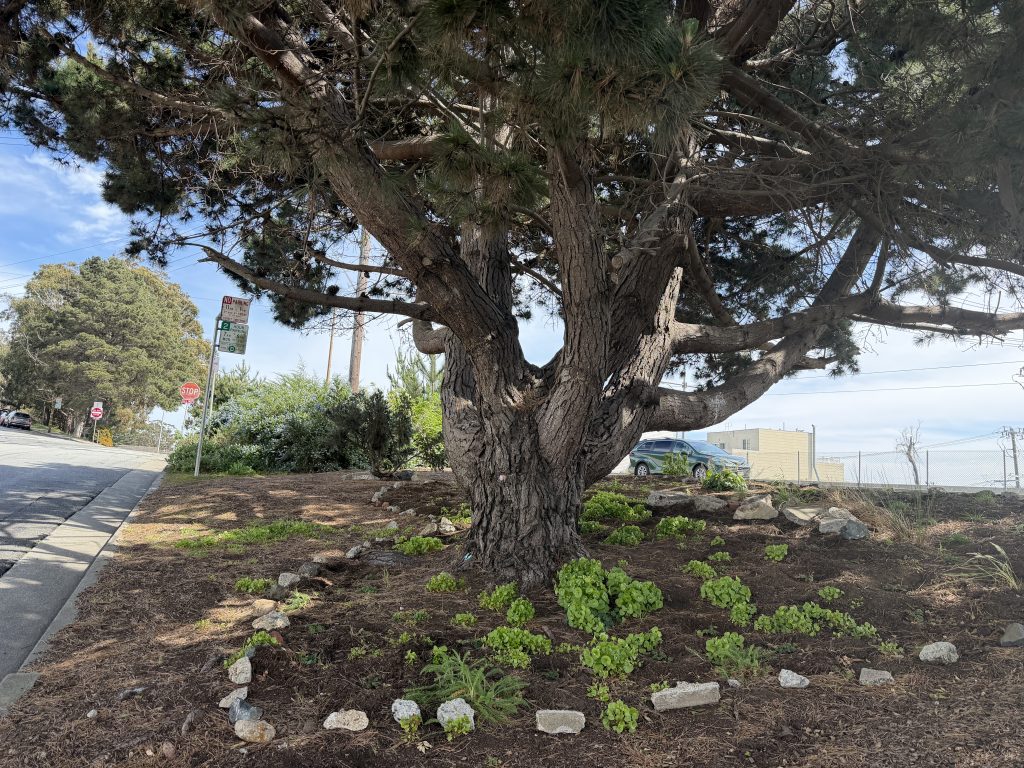
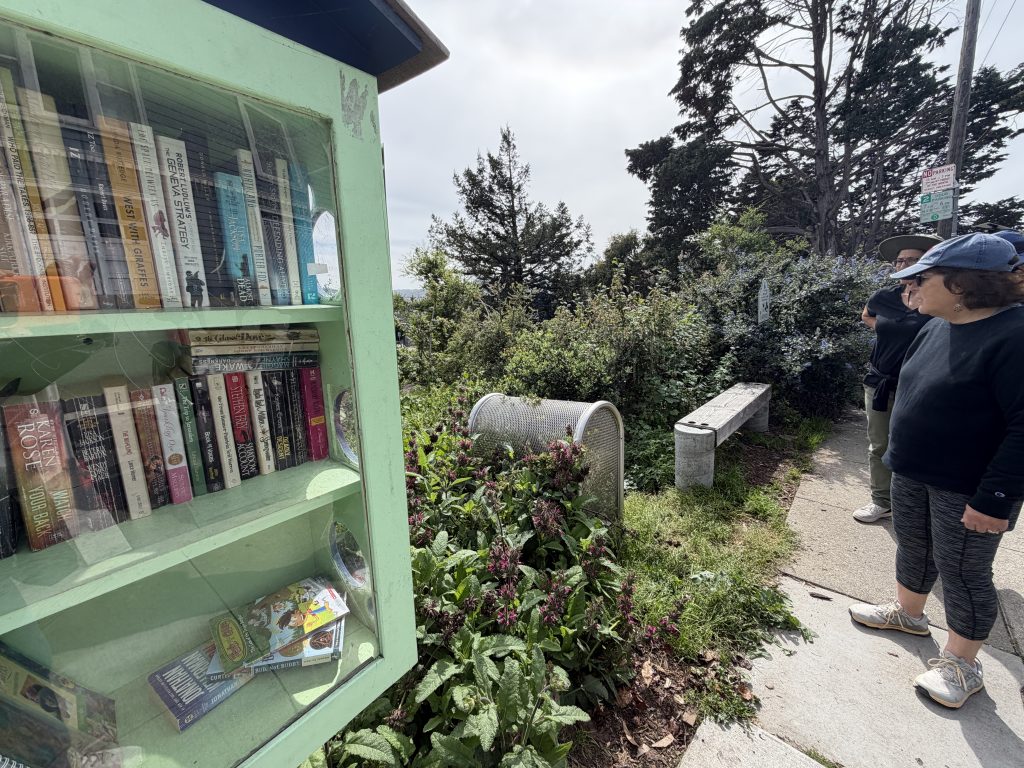
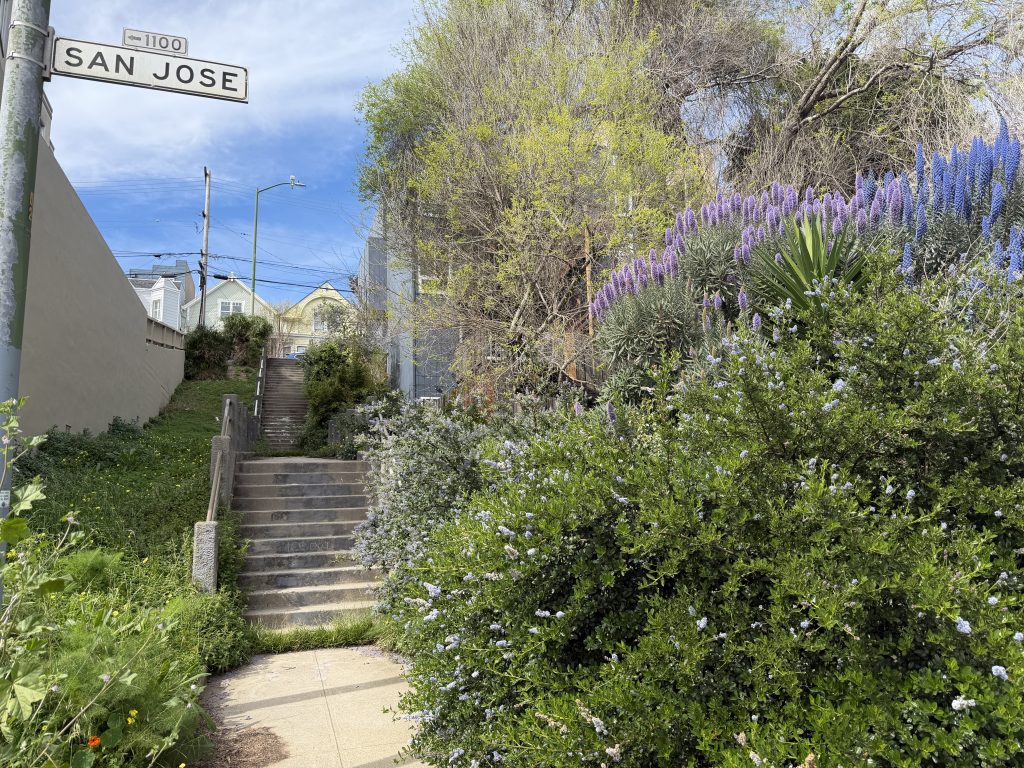
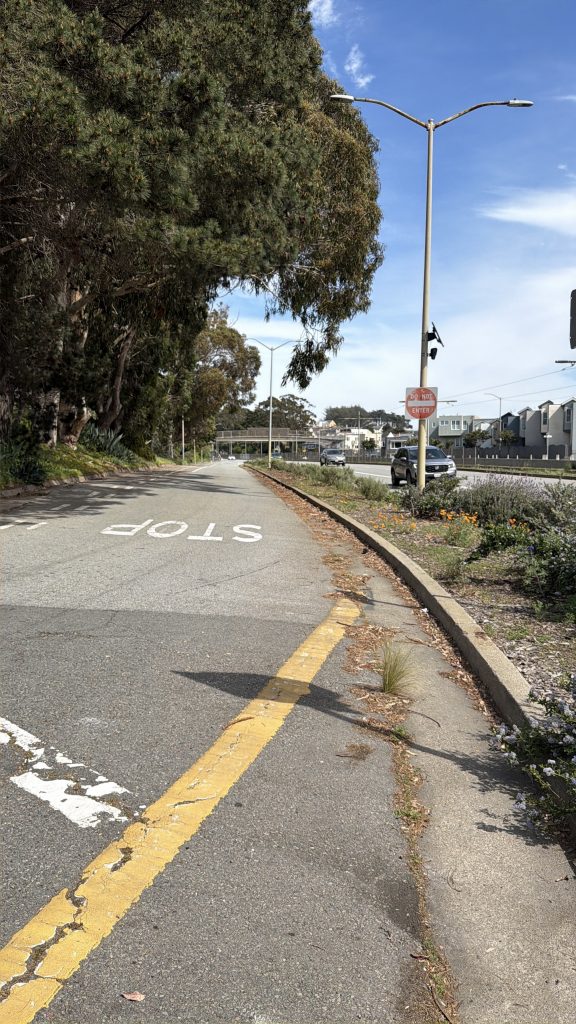
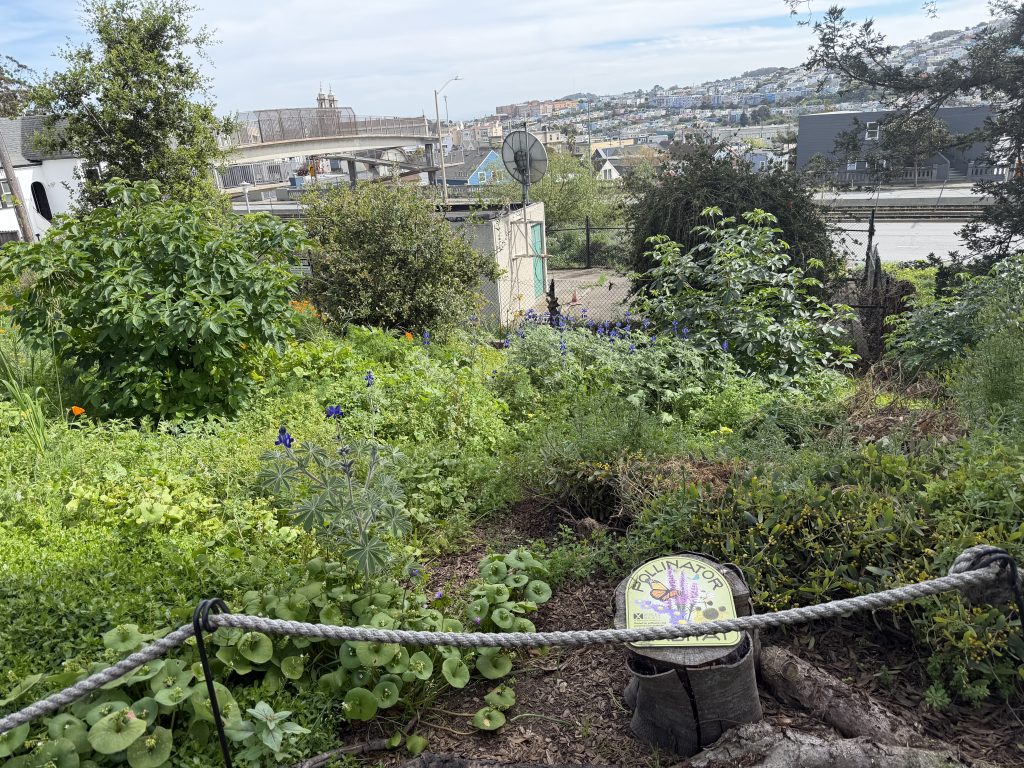
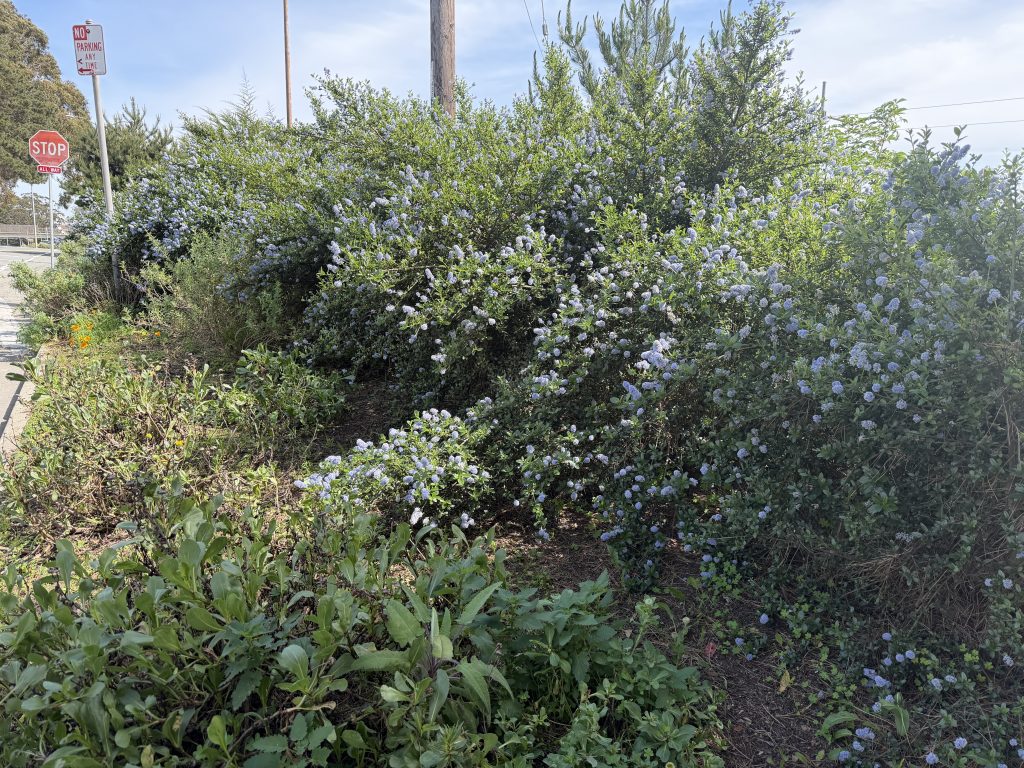
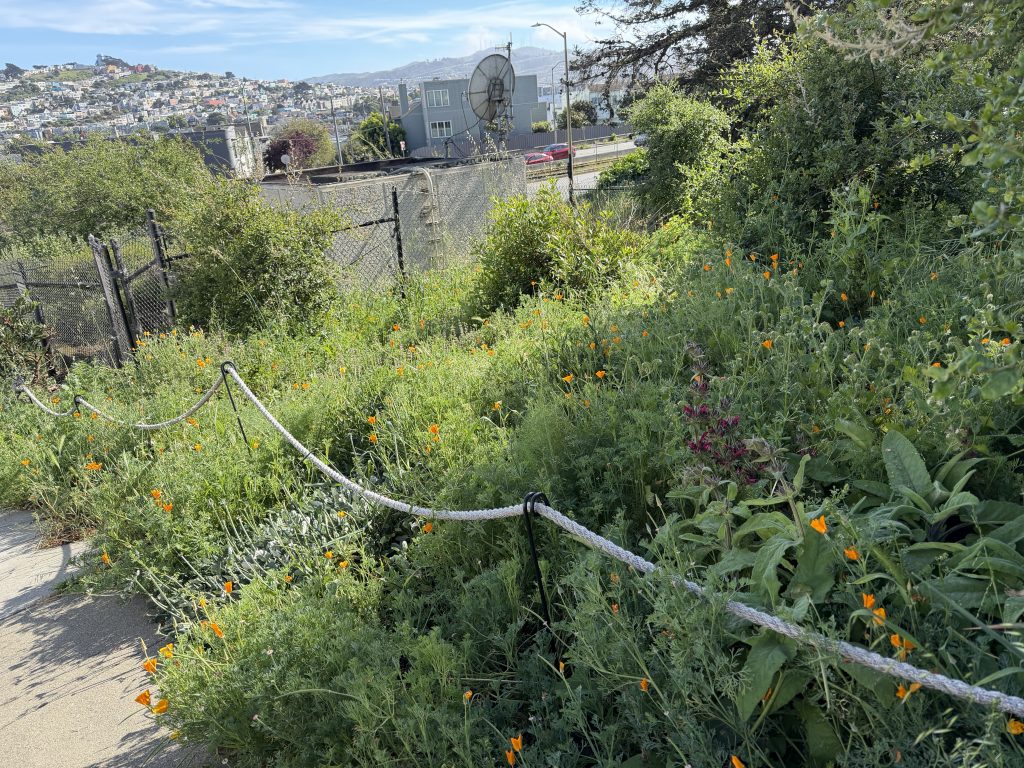
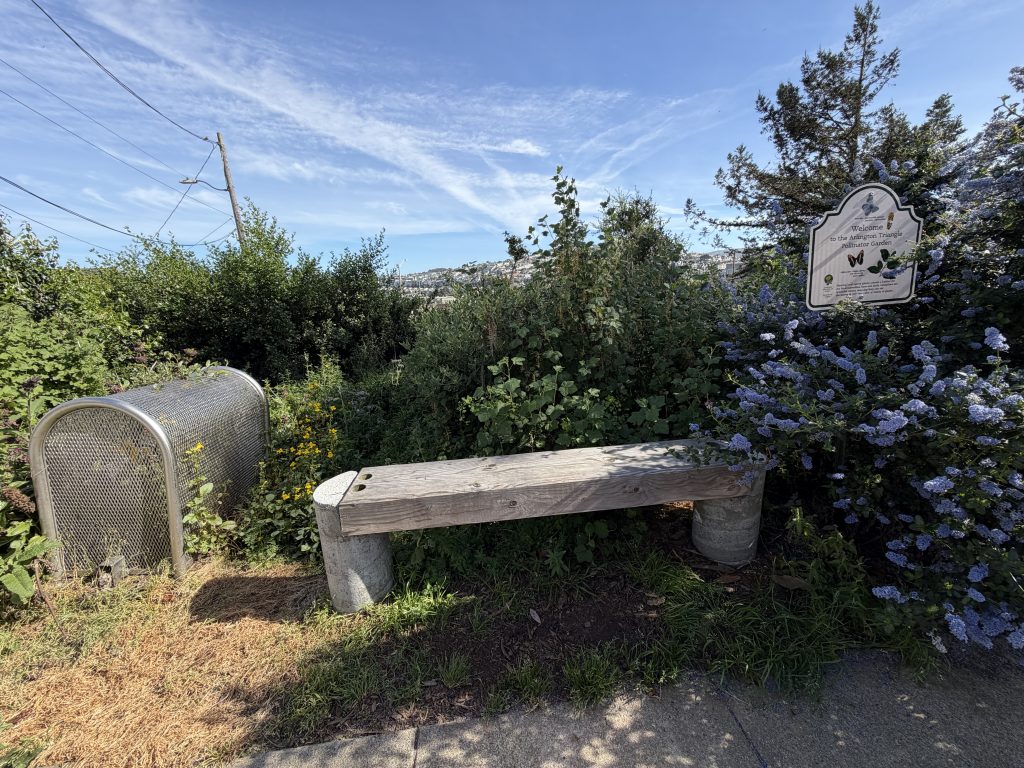
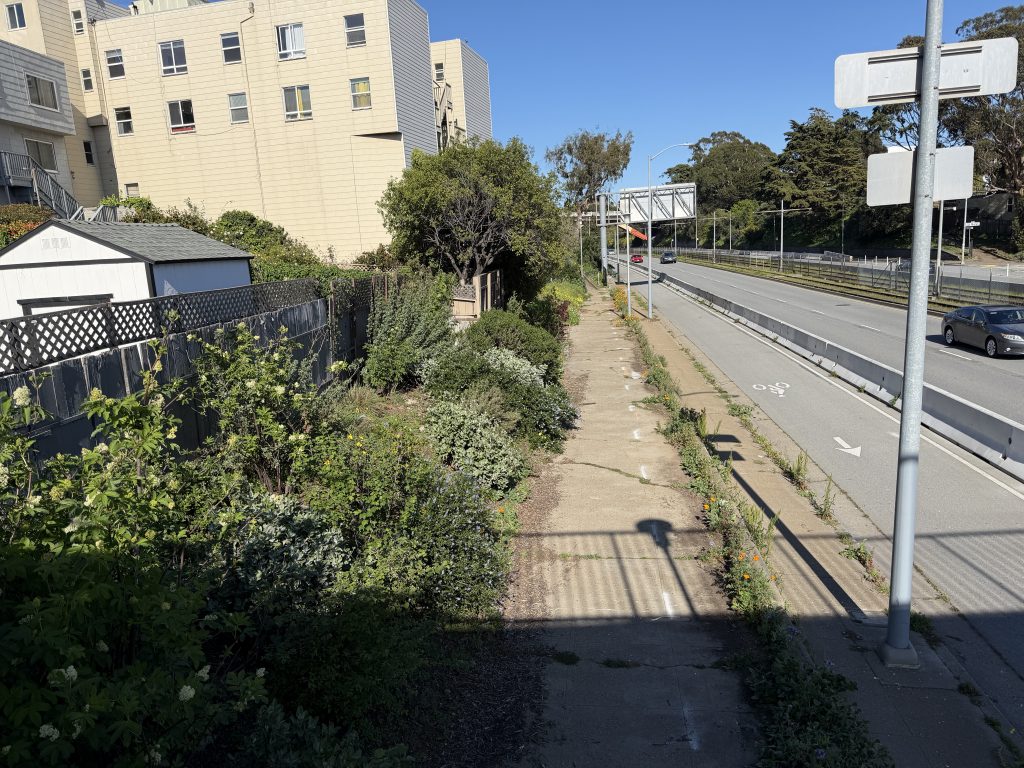
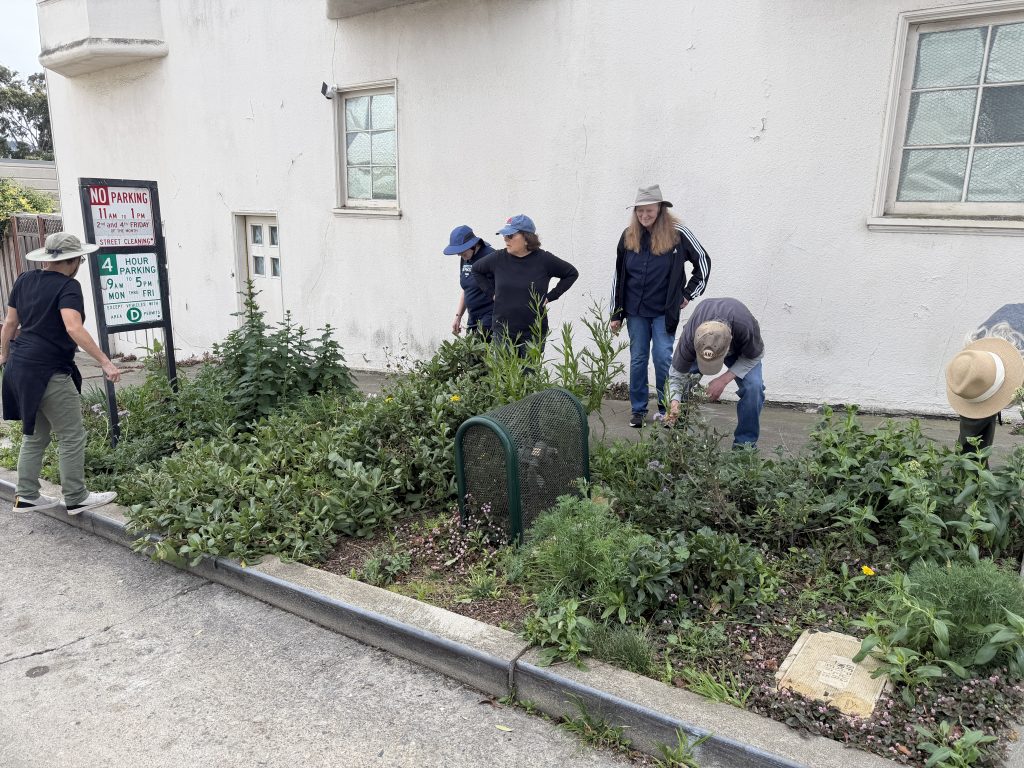
On a recent day as Spring was approaching the Glen Park News was taken on a walking tour of the beautiful nature that has been created by a determined group of volunteers: Sophie Constantinou (informal yet confirmed leader), Carol Hansen and Paul Muldown (husband and wife, always together), Jodell Scott, Carolyn White, and Scott Ellerthorpe and Laura Adams.
As everyone knows, Glen Park, though a small neighborhood, has a wealth of city parks, including Glen Canyon Park, Dorothy Erskine Park, and Billy Goat Hill. But it also has many unnamed public lands, gradually carved out as houses, shops, freeway entrances and exit ramps, underpasses, and dead ends filled the neighborhood. Not to mention San Jose Avenue and the train tracks which abruptly cut Glen Park off from other neighborhoods to the south.
Around the time of the pandemic when the only safe place was outside, neighbors, mostly on Arlington Street, one by one, looked around and discovered places that cried out for loving care.
Don’t call them guerilla gardeners, those who work the lands without permission of city agencies. There’s a formal Department of Public Works Street Parks Program, in which community-managed spaces on City-owned land are tended to by Street Park Stewards. The Street Parks Program transforms Public Works-owned parcels into green open space, gardens, and neighborhood gathering spaces.
For the requirements of the Street Stewards and to apply to the Street Park Program, click here.
Early Days

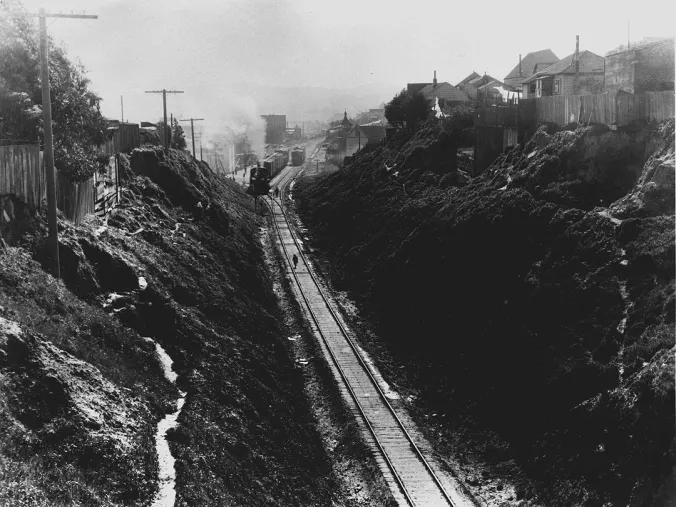
Bernal Cut looking north, circa 1912. Southern Pacific train passing under the Richland Street bridge. (Image courtesy OpenSFHistory, from the Emiliano Echeverria/Randolph Brandt Collection)

Before
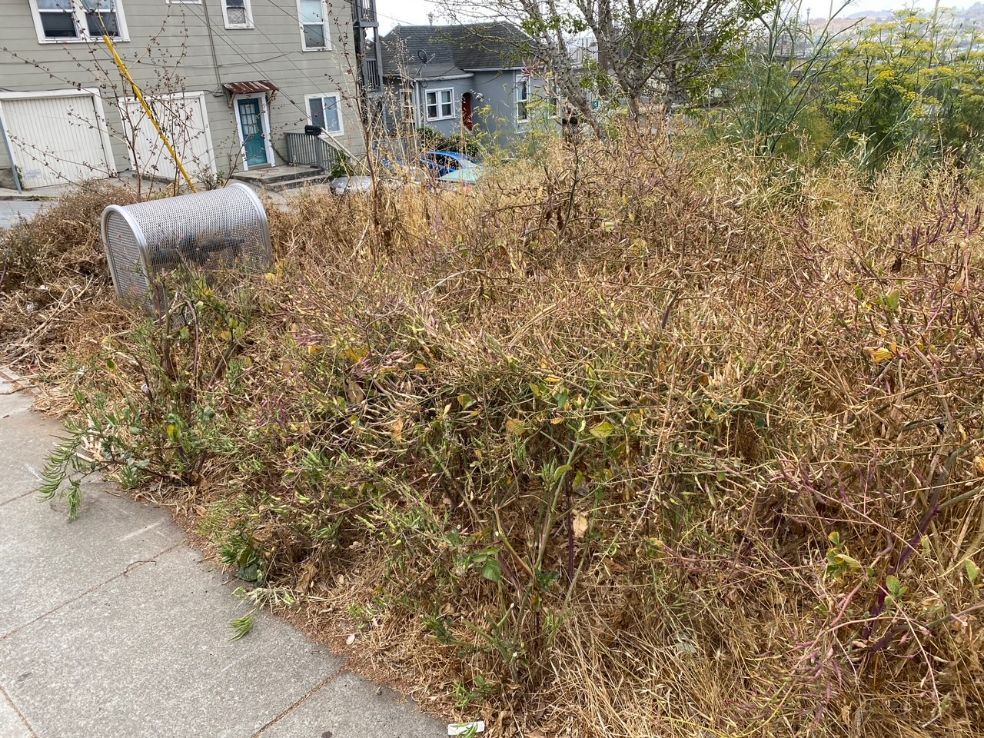

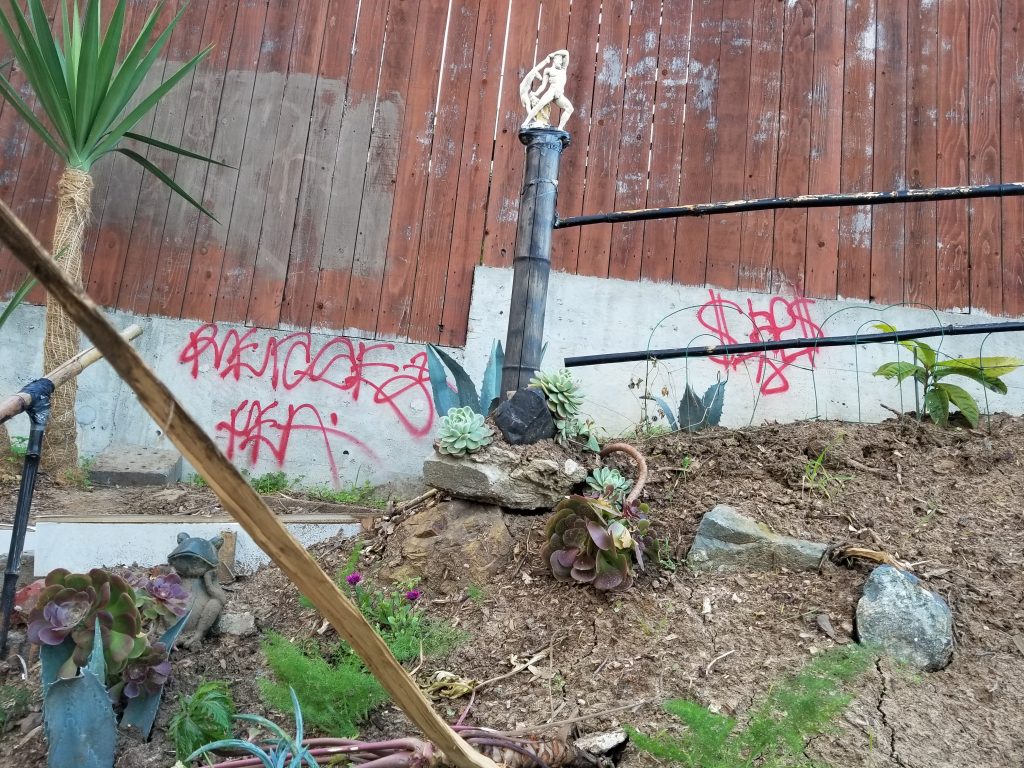
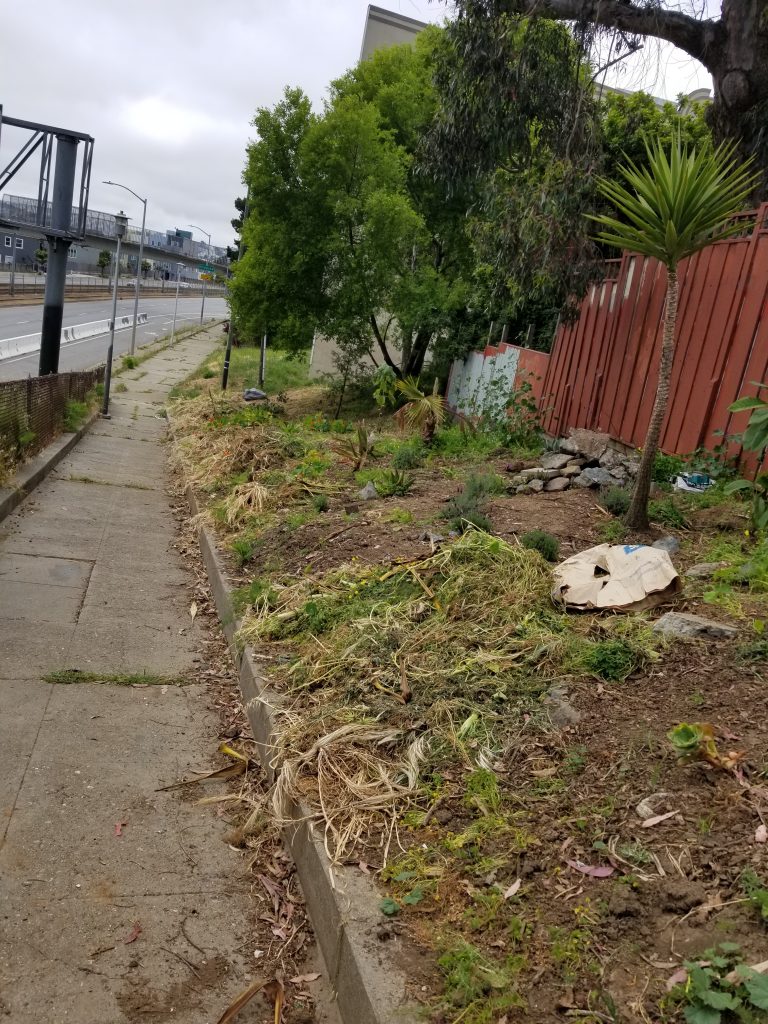
San Francisco has an extensive patchwork of these spaces and not enough resources nor staff to attend to all of them, in light of other pressing needs. However, Public Works provides material support such as tool loans for site work days, and services such as green waste pick up.
Except in certain cases, the Glen Park Street Stewards have a policy of planting only California native plants according to the immediate local condition. Sophie says, “Listen to the Earth, right? There’s this kind of soil, there’s this kind of shade, this is the environment. For example, butterflies would go extinct if they don’t have the habitat they need. Like lots of invertebrates they have to eat a certain thing which is usually a native plant.”
The California Native Plant Society donated cuttings of San Francisco native plants and before they knew it hundreds of plants were propagated.
Plants are obtained in a variety of ways: through donations, grants, even growing their own in their home gardens. No matter what the location, weeds and ivy need to be cleared before any of the fun part of planting.
What the Glen Park Street Stewards have created are not only spaces of natural beauty but places where everyone can gather in a spirit of community.
Carol Hansen and Paul Muldown

It all started with Carol and Paul. Retired corporate techies–“I was a systems person, Carol was a database person” Paul says. They tackled the most neglected of the neglected, the San Jose Avenue border areas and the exit median which leads to Arlington Street from San Jose Avenue, tapering to the “Tiny Tip.”
“I thought Carol was just nuts,” says Jodell, ‘What are you doing?’ and she just had a vision. I thought, ‘Who is crazy enough to plant on the median?'”
The same person that’s crazy enough to plant a “One Inch Garden” along San Jose Avenue:
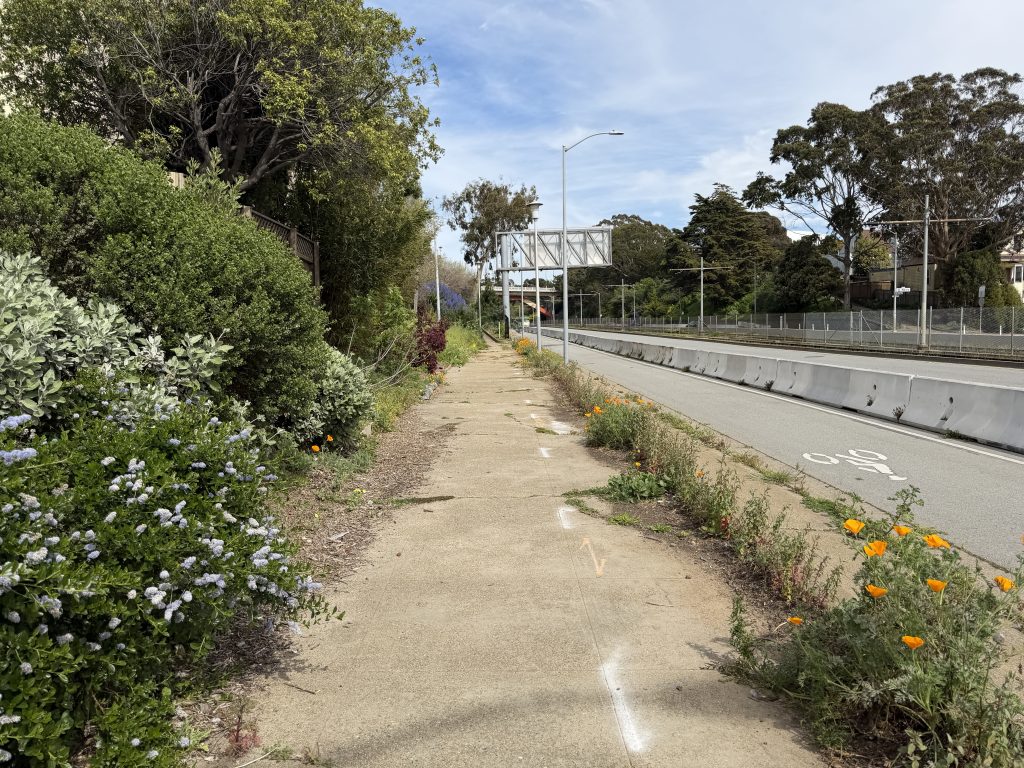
“We’re told that we’re plant freaks and butterfly freaks and caterpillar freaks. Yes, we are the Earth warriors!” says Carol.

Carol and Paul can be seen most days working on one space or another. Not content to rest on their laurels, they have ambitions to connect Arlington Street with plantings from one end to the other.
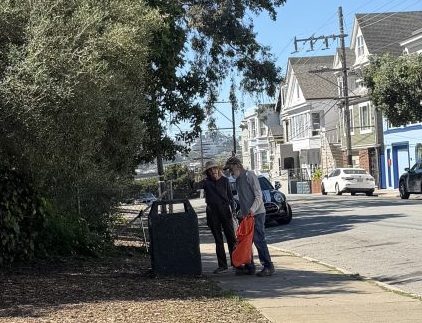
Sophie Constantinou

Each member of the mighty band agrees that Sophie is their leader–their admiration for her is palpable. She knows the ins and outs of how to get things done through city agencies and other organizations, how to obtain grants, how to organize workdays, and how to get into digging in and doing the work.
Her day job is as a filmmaker with Citizen Film, a local non-profit documentary film company which she co-founded with Sam Ball and Kate Stilley Steiner.
As a member of the California Native Plant Society, Sophie has led nature walks in the neighborhood. Before getting involved on Arlington Street, in 2015 she spearheaded work on the Bernal Cut on the other side of San Jose Avenue opposite the Arlington Path. Both parcels are now been added to the Crosstown Trail.

“We’ve done some crazy wildflower seeding and we try to grow plants when they’re small enough to get established but big enough not to get crushed. We get into some really geeky stuff, in case you haven’t already noticed,” she says.
It’s not all sunshine, lollipops and rainbows, however. San Jose Avenue is not particularly scenic. As a major north-south artery through Glen Park, Bernal Heights and the Ingleside neighborhoods and adjacent to the I-280 freeway–also the locus of the J-Church light rail line–the roadway generates traffic, noise and trash, notes Sophie. “It means that people don’t really want to be here. You get a certain set of unhoused people, graffiti, opportunities for dumping stuff and smash-and-grab situations. So by beautifying it we’ve come together as a community that will together address those problems.”
Sophie’s next neighborhood project is the creation of a mural at the site of the San Jose Avenue underpass at Bosworth and Lyell Streets. A mural design workshop will be at the Glen Park Library, Saturday, April 4, from 3-5pm. It will be led by the artist, Sirron Norris, who also created the Elk Street Mural.

Carolyn White

Carolyn’s career was in clinical labs and medical devices and later did career coaching as part of a global training department.
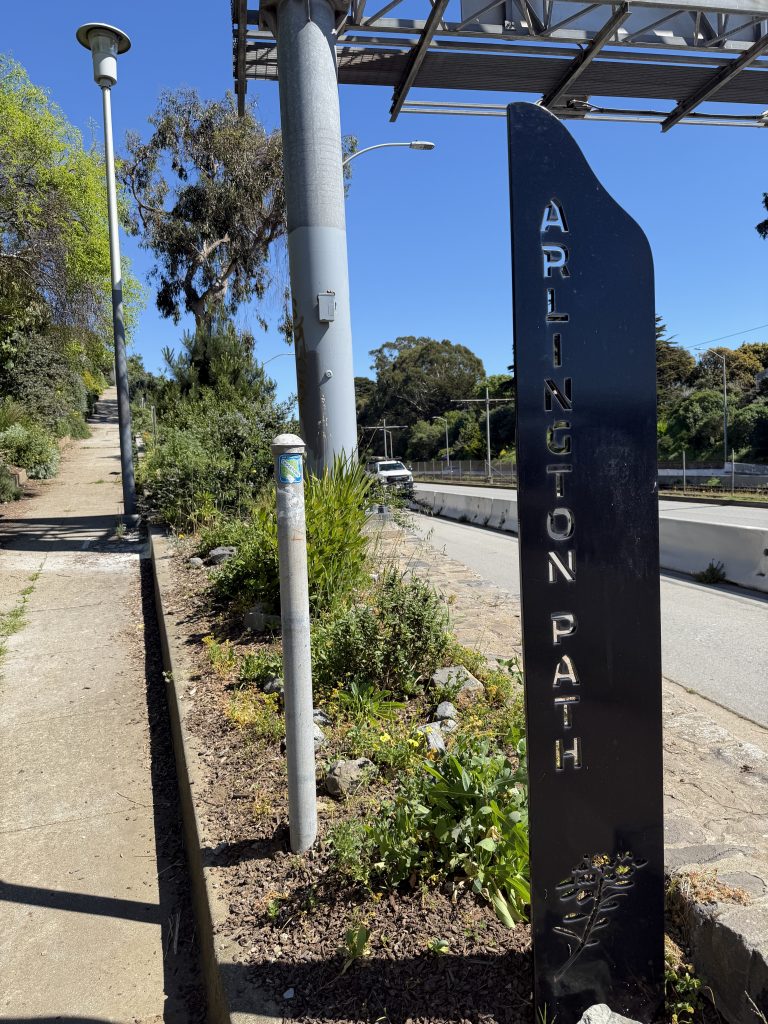
Her beat is the Arlington Path–she’s been working on it since around 2016. It used to be filled with fennel and weeds, graffiti and trash. And a rusty old falling down chain link fence that just “disappeared” over time.
Before hooking up with Sophie, Carolyn and another neighbor, Scott Stawicki, got some plants from a nursery and a lot of donations. They planted succulents at first because they were easy and they would grow. “We had some work parties. I had a hose through my fence so Scott and I could water everything and it involved filling buckets and milk jugs with water up behind the fence and down to this end.” Scott suggested that Carolyn meet up with Sophie. “She’s doing cool stuff on the Bernal Cut side.”
Then Carolyn, Sophie, Carol and Paul–the “People Pollinators,” as Carolyn calls them– went behind the fence with picks, crowbars and weeding instruments and they got a few day laborers to to help them because it was all rock. “And the best places to dig were where the fennel was growing,” Carolyn said. “Because we knew something could get through–it’s just blossomed literally from here.”

Jodell Scott

The open space between Roanoke and Natick Streets might look unfinished but that’s by design. Jodell, a former real estate appraiser, thought the stretch of Arlington could use an empty space: “There’s got to be a place for humans and dogs and sitting and celebrating the work we’ve done.”

About once a year they have mulch delivered and have a work party to spread it. Ten or 12 of the neighbors on the block come out to help, and sandwiches tend to magically appear. “The best thing of all of this the more we do, the more people see us doing and they get inspired. Then they’ll come out and pull a few weeds or they’ll start picking up trash.”
Over the years she’s collected random benches from the likes of NextDoor and Craigslist. And then there’s the occasional anonymous contribution which just appears; Jodell carefully curates those.
Scott Ellerthorpe and Laura Adams
Scott and Laura are dedicated stewards of the area at the corner of Bosworth and Arlington and have planted and tended to many beautiful native plants (mostly grown by Sophie and Carol).
“Everything here has been planted by us, except the weeds,” says Scott.
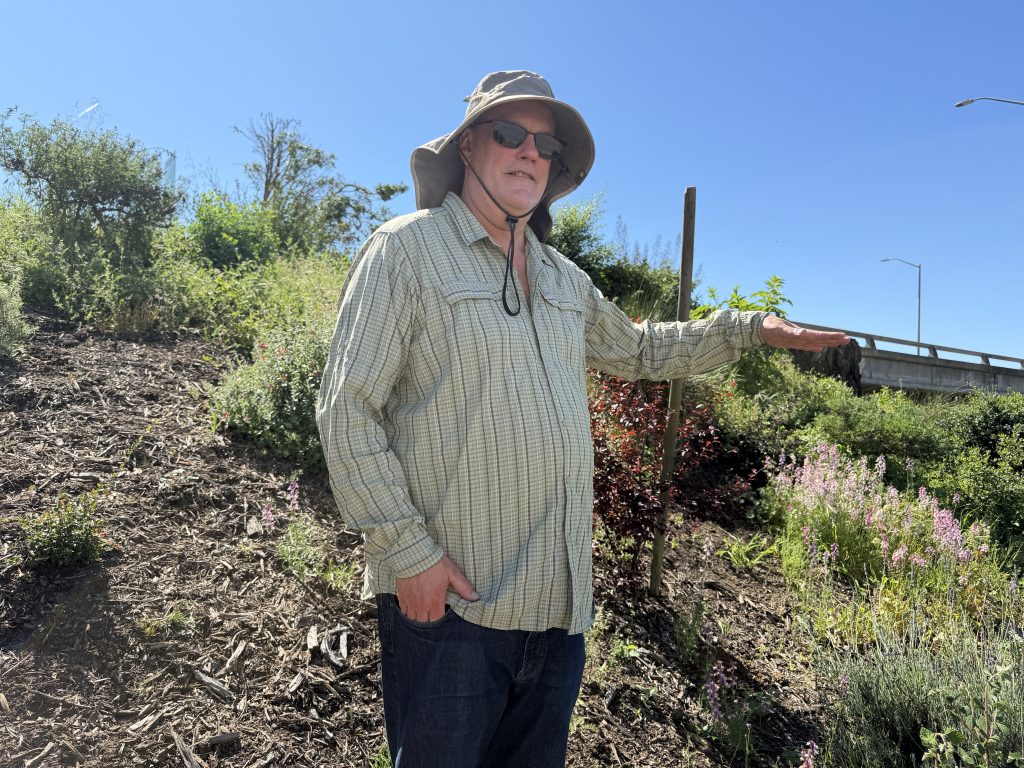
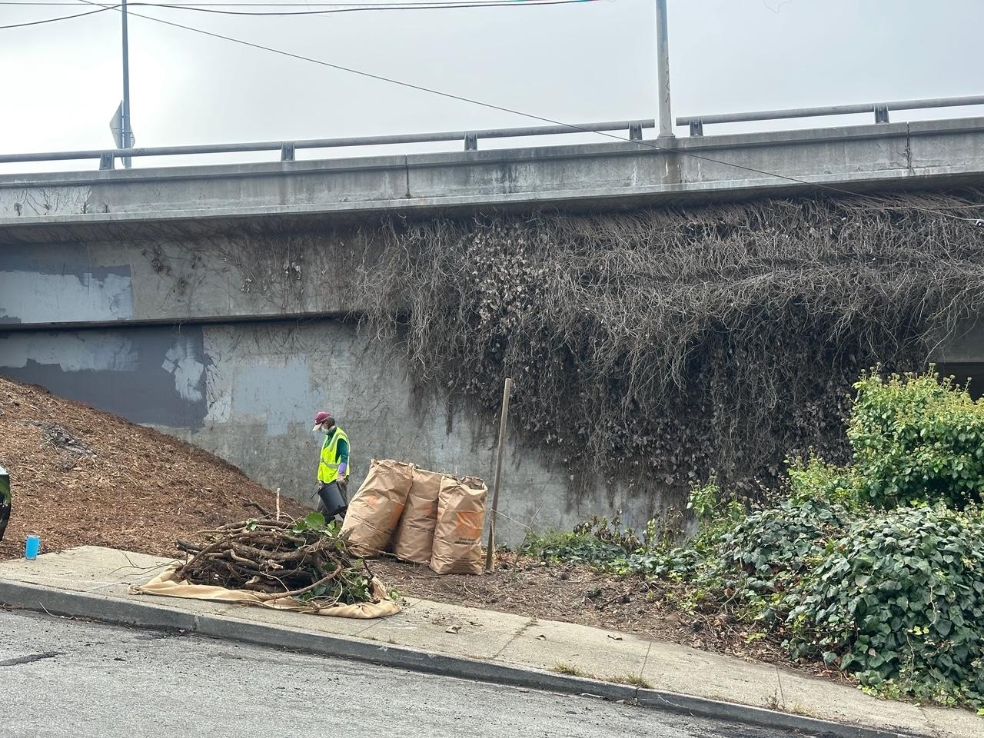
They got started during the pandemic. They noticed their neighbors, Carol and Paul, working up the street and asked what they were doing. Then they decided to help by starting to work a space that no one else had claimed.